
Introduction
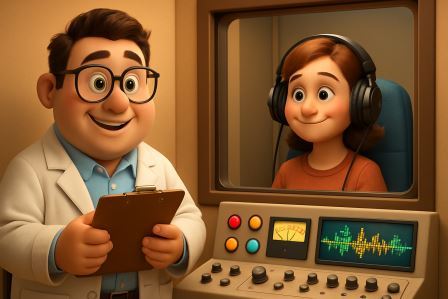
Imagine a patient walks into your clinic, worried about their hearing. Your job is to figure out exactly what’s going on. To do that, you rely on diagnostic tests. But how do you know if a test is actually any good? Choosing the right test, and knowing you can trust its results, is fundamental to providing excellent patient care. It’s the difference between accurately identifying a hearing loss and potentially missing it, or between setting a patient on the right path to rehabilitation versus sending them down a frustrating end.
In audiology, we broadly categorize our diagnostic tools into two main types:
Behavioural tests, which require the patient to respond in some way.
Physiological tests, which measure the body’s automatic responses to sound.
Both types are crucial, but they have different strengths and weaknesses. We will now explore the essential characteristics that make any diagnostic test – whether behavioural or physiological, a reliable and valuable tool in audiology. Understanding these characteristics helps us, critically evaluate the tests we use every day and make informed decisions for your patients.
What Makes a Diagnostic Test “Good”?
So, what exactly are we looking for in a diagnostic test? It isn’t just about getting an answer. It’s about getting the right answer, consistently and efficiently. Several key characteristics define the quality and usefulness of any test you’ll use in the clinic.
Validity
Validity is about accuracy – does the test actually measure what it claims to measure? A valid hearing test accurately reflects the patient’s true hearing ability. It’s possible for a test to be reliable (consistent) but not valid (accurate). For example, an out of calibration thermometer might consistently read 5 degrees too high. It’s reliable in its error, but it’s not valid because it doesn’t show the true temperature. In audiology, we need tests that are both reliable and valid to make accurate diagnoses.
Reliability
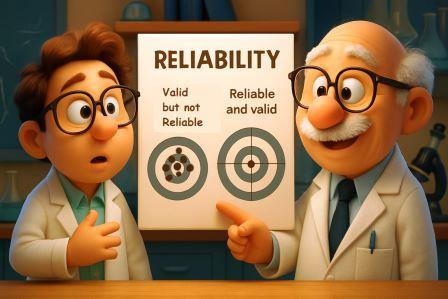
Reliability is consistency. A reliable test gives you similar results if you repeat it on the same person under the same conditions. Imagine using a hearing test that gives wildly different results each time you use it on the same patient, even when their hearing hasn’t changed. That wouldn’t be very helpful, would it? Reliability ensures that the results you get are stable and dependable.
Sensitivity and Specificity
These two often go hand-in-hand and are crucial for diagnostic accuracy. In one of the previous we have discussed these terms and other related terms in detail.
Sensitivity refers to a test’s ability to correctly identify patients who do have the condition (e.g., hearing loss). A highly sensitive test will catch almost everyone with the condition, minimizing false negatives (where the test says someone is fine when they actually have the condition).
Specificity, on the other hand, is the test’s ability to correctly identify patients who do not have the condition. A highly specific test will correctly rule out the condition in healthy individuals, minimizing false positives (where the test says someone has the condition when they actually don’t). Ideally, we want tests that are both highly sensitive and highly specific, but sometimes there’s a trade-off between the two.
After these four attributes one more characteristic which is less talked about is efficiency of a test.
Efficiency
This relates to the practical aspects of using the test. Is it affordable? How long does it take to perform? Is it easy for both the clinician and the patient? An incredibly accurate test might be useless in a busy clinic if it takes hours to complete or requires extremely expensive equipment. Efficiency ensures that a test is practical and feasible to use in real-world clinical settings. We need tests that are not only accurate and reliable but also fit within the practical constraints of time, cost, and ease of use.
Behavioural Tests: Listening for Responses
Behavioural tests are the cornerstone of traditional hearing assessment. They rely on the patient actively participating and indicating whether they heard a sound. Think of tests like Pure Tone Audiometry (PTA), where patients raise their hand or press a button when they hear a beep, or Speech Audiometry, where they repeat words they hear. These tests directly assess a person’s hearing perception.
How do our key characteristics apply here?
Validity is generally strong for behavioural tests like PTA, as they directly measure the quietest sound a person can perceive across different frequencies – the definition of hearing threshold.
Reliability in behavioural tests depends heavily on factors like clear instructions, patient understanding and cooperation, and a controlled testing environment. If a patient is tired, confused about the task, or distracted by background noise, the results might not be consistent even if their hearing hasn’t changed. As clinicians, ensuring the patient is comfortable and understands the task is crucial for reliability.
When considering Sensitivity and Specificity, behavioural tests are often the ‘gold standard’ against which other tests are compared, particularly for identifying the degree and type of hearing loss in cooperative adults. They are generally very sensitive to the presence of a hearing loss. However, specificity can sometimes be a challenge in difficult-to-test populations (like very young children or individuals with cognitive impairments) where a lack of response might not truly mean they didn’t hear.
Efficiency is a mixed bag. PTA requires specialized equipment (audiometer, sound booth) and takes a reasonable amount of time. While generally efficient in a clinical setting, it requires patient cooperation, which isn’t always possible.
Physiological Tests: Measuring Automatic Responses
Unlike behavioural tests, physiological tests don’t require the patient to consciously respond. Instead, they measure automatic physiological responses from the auditory system when sound is presented. Examples include Otoacoustic Emissions (OAEs), which measure sounds produced by the inner ear (cochlea), and Auditory Brainstem Response (ABR), which measures the electrical activity along the auditory nerve and brainstem pathways in response to sound. These tests provide information on how the auditory system is functioning, rather than how the person perceives sound.
How do our characteristics fit here?
Validity depends on the specific test and what it’s intended to measure. OAEs are valid indicators of outer hair cell function in the cochlea, while ABR provides valid information about the integrity of the auditory pathway up to the brainstem. It’s important to remember they don’t directly measure ‘hearing’ in the perceptual sense, but rather the function of specific parts of the system. Chose the wrong test for the wrong system and validity is completely lost.
Reliability for physiological tests is often quite high because they are objective – the results aren’t usually influenced by the patient’s attention, motivation, or understanding of the task (though factors like patient movement or muscle noise can affect tests like ABR). This makes them particularly valuable for infants, young children, or individuals who cannot provide reliable behavioural responses.
Regarding Sensitivity and Specificity, physiological tests excel in certain areas. OAEs are highly sensitive to cochlear dysfunction, making them excellent for newborn hearing screening. ABR is very sensitive for detecting auditory neuropathy spectrum disorder (ANSD) or retrocochlear pathology (problems beyond the cochlea). Their specificity is also generally good for ruling out these specific conditions. However, they might not be as sensitive as behavioural tests for detecting mild hearing losses or subtle processing difficulties.
Efficiency varies. OAE testing is typically very quick, taking only a few minutes per ear, and relatively inexpensive. ABR testing, especially diagnostic ABR, can be more time-consuming and may require the patient to be asleep or very still, potentially requiring sedation in some cases, which adds complexity and cost.
Why Understanding Test Characteristics Matters
Grasping these core characteristics – reliability, validity, sensitivity, specificity, and efficiency – isn’t just academic. It’s fundamental to becoming a competent and confident clinician. Why? Because every day in the clinic, you’ll be faced with choices about which tests to use for a particular patient and situation. Understanding the strengths and limitations of each test, based on these characteristics, allows you to select the most appropriate tools for the job.
Knowing about sensitivity and specificity helps you interpret results accurately. If a screening test with high sensitivity comes back negative, you can be more confident that the patient likely doesn’t have the condition. Conversely, understanding potential trade-offs helps you know when cross-checking results with another test (using the principle of cross-check principle, often involving both behavioural and physiological measures) is necessary to confirm a diagnosis. Considering efficiency helps you manage clinic time and resources effectively, ensuring you provide thorough care without unnecessary delays or costs. Ultimately, a solid understanding of test characteristics empowers you to make sound clinical decisions, interpret findings critically, and explain results clearly to patients and their families, leading to better patient outcomes.
Conclusion: Choosing Wisely for Better Hearing Care
Selecting and interpreting diagnostic tests is a core skill in audiology. As we’ve seen, a “good” test isn’t just about fancy technology; it’s about possessing the crucial characteristics of reliability, validity, sensitivity, specificity, and efficiency. Behavioural and physiological tests each offer unique insights into a patient’s auditory status, and understanding how these characteristics apply to each type helps you leverage their strengths effectively.
Mastering these concepts is key to navigating the complexities of hearing assessment. It allows you to move beyond simply performing tests to critically evaluating their results, making informed diagnostic decisions, and ultimately, providing the best possible care for individuals with hearing and balance concerns. Keep these characteristics in mind and step into the clinic – they are the foundation upon which accurate diagnoses and successful patient outcomes are built.
[…] getting a second opinion, but within your own assessment process. The core purpose is to ensure the reliability (consistency) and validity (accuracy) of your findings. It acts as a built-in quality control mechanism for our diagnostic […]